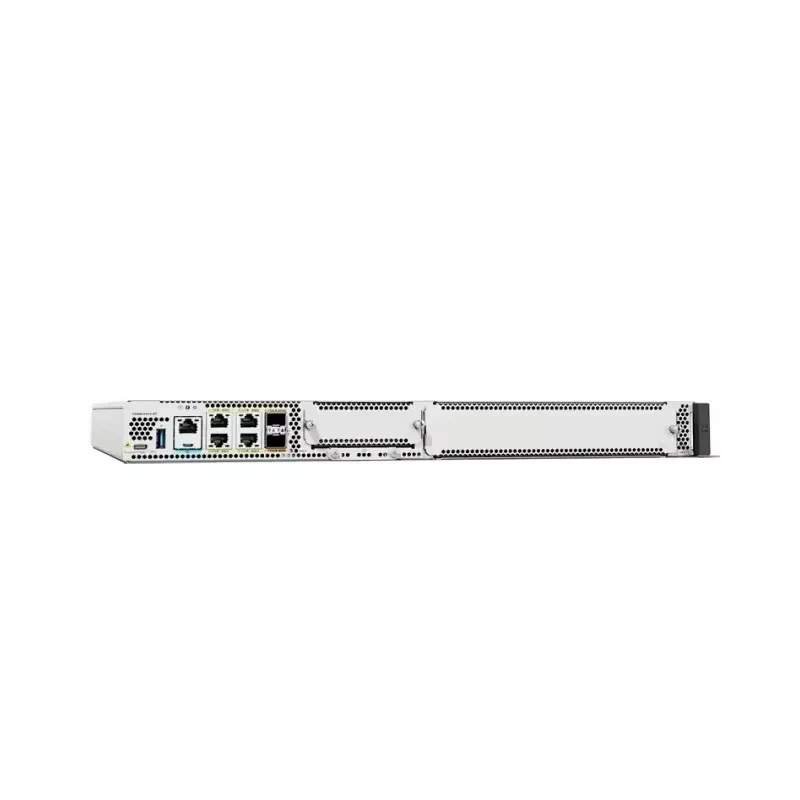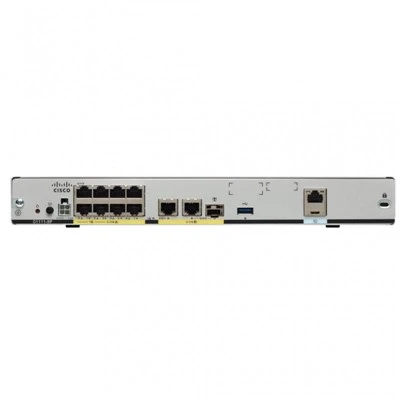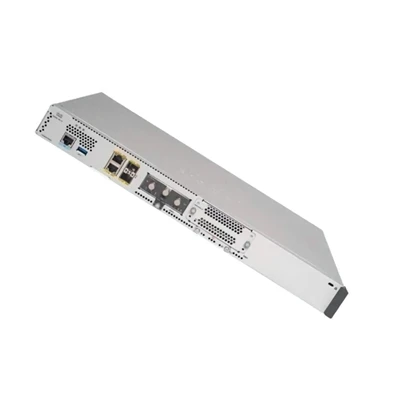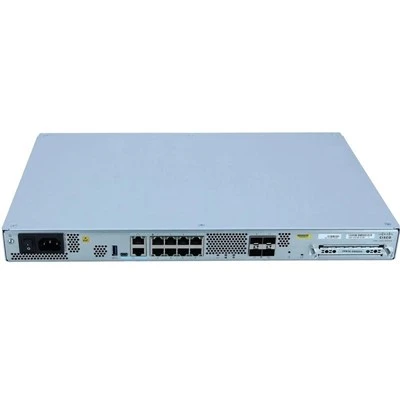



As an industrial switches supplier, I've witnessed firsthand the growing demand for seamless integration of industrial switches with other industrial equipment. In today's complex industrial environments, the ability to integrate different components is crucial for achieving optimal performance, efficiency, and reliability. This blog post will explore the feasibility and benefits of integrating industrial switches with other industrial equipment, and how our products, such as the IE-3400-8P2S-E, IE-3400-8T2S-E, IE-3300-8P2S-E, and IE-3300-8T2S-E, can play a significant role in this integration.
The Feasibility of Integration
Industrial switches are designed to provide reliable and high-speed network connectivity in industrial settings. They are built to withstand harsh environmental conditions, such as extreme temperatures, humidity, vibration, and electrical interference. These features make them well-suited for integration with a wide range of industrial equipment, including programmable logic controllers (PLCs), human-machine interfaces (HMIs), sensors, actuators, and industrial computers.
One of the key factors that enable the integration of industrial switches with other equipment is the use of standard communication protocols. Most industrial switches support popular protocols such as Ethernet/IP, Modbus TCP, Profinet, and EtherCAT. These protocols allow different devices to communicate with each other over a common network, enabling seamless data exchange and control.
In addition, modern industrial switches often come with advanced features such as VLAN (Virtual Local Area Network) support, QoS (Quality of Service), and port mirroring. These features can be used to optimize network performance, prioritize critical traffic, and troubleshoot network issues. They also provide the flexibility to integrate different types of devices and applications into a single network infrastructure.
Benefits of Integration
Integrating industrial switches with other industrial equipment offers several benefits for industrial operations.
Improved Efficiency
By integrating different devices into a single network, industrial switches eliminate the need for multiple communication interfaces and cables. This simplifies the network infrastructure, reduces installation and maintenance costs, and improves overall system efficiency. For example, in a manufacturing plant, integrating PLCs, sensors, and HMIs with an industrial switch allows for real-time data collection and analysis, enabling faster decision-making and more efficient production processes.
Enhanced Reliability
Industrial switches are designed to provide high levels of reliability and availability. They often feature redundant power supplies, link aggregation, and ring topology support, which ensure continuous network operation even in the event of a single point of failure. When integrated with other industrial equipment, these reliability features can be extended to the entire system, reducing downtime and improving productivity.
Better Visibility and Control
Integrating industrial switches with other equipment enables centralized monitoring and control of the entire industrial network. Network administrators can use management software to monitor network traffic, configure devices, and troubleshoot issues in real-time. This provides greater visibility into the system's performance and allows for proactive maintenance and optimization.
Scalability
As industrial operations grow and evolve, the ability to scale the network infrastructure is essential. Industrial switches are designed to be easily expandable, allowing for the addition of new devices and applications as needed. This scalability ensures that the network can adapt to changing requirements without significant disruptions.
Our Industrial Switches for Integration
At our company, we offer a wide range of industrial switches that are specifically designed for integration with other industrial equipment. Our IE-3400-8P2S-E and IE-3400-8T2S-E series switches are high-performance devices that support a variety of communication protocols and advanced features. They are ideal for use in industrial automation, transportation, and power distribution applications.
The IE-3300-8P2S-E and IE-3300-8T2S-E series switches are more compact and cost-effective options that still offer excellent performance and reliability. They are suitable for smaller industrial networks and applications where space and budget are limited.
All of our industrial switches are built to meet the highest standards of quality and reliability. They are tested and certified to comply with industry standards, such as UL, CE, and RoHS, ensuring that they are safe and environmentally friendly.
Challenges and Considerations
While the integration of industrial switches with other industrial equipment offers many benefits, there are also some challenges and considerations that need to be addressed.
Compatibility
One of the main challenges is ensuring compatibility between different devices and protocols. Different manufacturers may use different versions of the same protocol, or they may implement the protocol in slightly different ways. This can lead to communication issues and interoperability problems. To overcome this challenge, it is important to choose industrial switches and other equipment from reputable manufacturers that have a proven track record of compatibility.


Security
Industrial networks are increasingly becoming targets of cyberattacks. When integrating industrial switches with other equipment, it is crucial to implement appropriate security measures to protect the network and the connected devices. This includes using firewalls, intrusion detection systems, and encryption technologies to prevent unauthorized access and data breaches.
Network Design
Proper network design is essential for the successful integration of industrial switches with other equipment. The network should be designed to meet the specific requirements of the industrial application, including bandwidth, latency, and reliability. It is also important to consider factors such as network topology, cable management, and power distribution.
Conclusion
In conclusion, industrial switches can be effectively integrated with other industrial equipment to improve efficiency, reliability, visibility, and scalability. By using standard communication protocols, advanced features, and high-quality products, such as our IE-3400-8P2S-E, IE-3400-8T2S-E, IE-3300-8P2S-E, and IE-3300-8T2S-E, industrial operators can achieve seamless integration and optimize their industrial networks.
If you are interested in learning more about our industrial switches and how they can be integrated with your existing industrial equipment, please contact us for a consultation. We are committed to providing you with the best solutions for your industrial networking needs.
References
- Industrial Ethernet Handbook, Second Edition, by Peter Welander.
- Cisco Industrial Ethernet Switches Product Documentation.