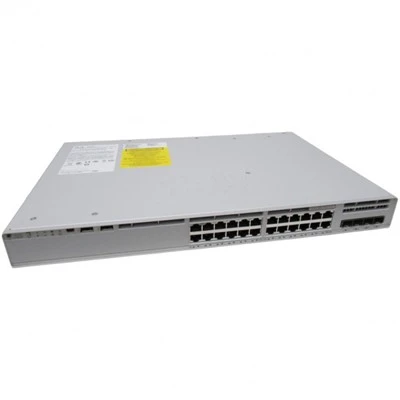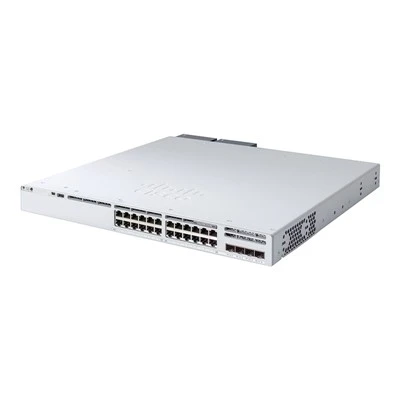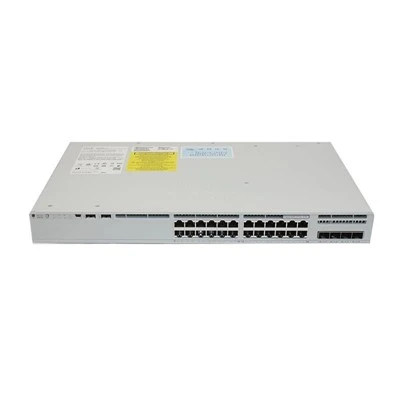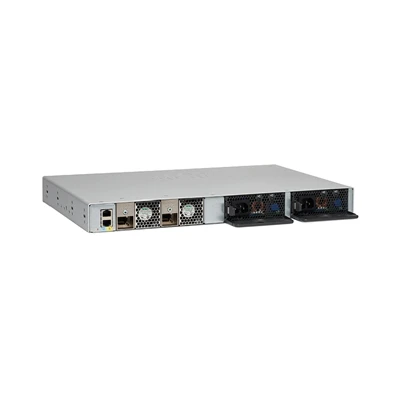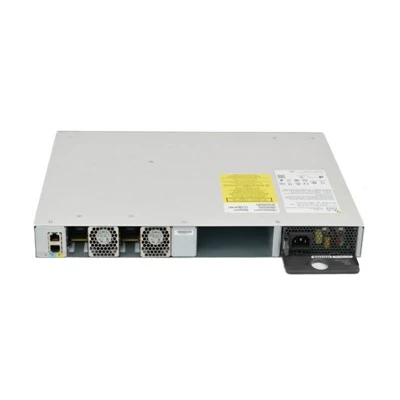

Cisco switches, provided by Cisco Systems, play a crucial role in enterprise network infrastructure. Because different network environments have varying requirements in terms of performance, scale, and functionality, selecting the appropriate switch requires a comprehensive evaluation based on real-world application scenarios to ensure long-term stability and support for business growth.
The first consideration is network size. For small office environments, access layer switches with fewer ports and basic functionality are typically sufficient for daily device connectivity. In contrast, medium to large enterprises or data center environments require distribution or core layer switches with higher forwarding capacity and stronger scalability to handle heavy concurrent traffic.
Performance specifications are also critical in the selection process. Key indicators such as backplane bandwidth, packet forwarding rate, and latency directly affect how well the device performs under heavy workloads. For data center or core network scenarios, models with hardware acceleration and high throughput should be prioritized to ensure service continuity.
Feature requirements must also be evaluated based on actual needs. Functions such as VLAN segmentation, Layer 3 routing, link aggregation, and access control may be necessary depending on network complexity. In more advanced environments, switches with Layer 3 capabilities are preferred to improve flexibility and simplify network management.
Security considerations are equally important. Switches that support port security, access control lists, and traffic anomaly detection help reduce the risk of unauthorized access and cyber threats, thereby protecting enterprise data assets.
Scalability and compatibility should not be overlooked. Support for modular expansion, stacking technology, and compatibility with existing network infrastructure can significantly influence future upgrade costs and deployment flexibility.
Finally, vendor reliability and after-sales support also play a key role. Cisco products are known for their strong technical support ecosystem and regular software updates, which are essential for maintaining stable long-term operations.
Overall, selecting a Cisco switch requires a balanced assessment of network scale, performance, functionality, security, and scalability to build a stable, efficient, and sustainable network infrastructure.