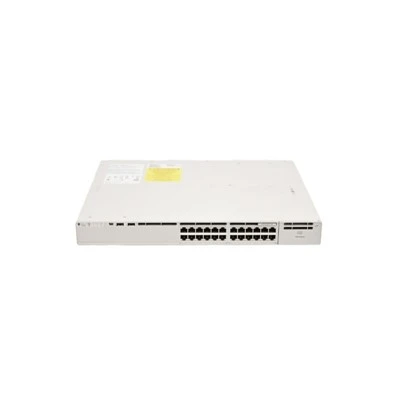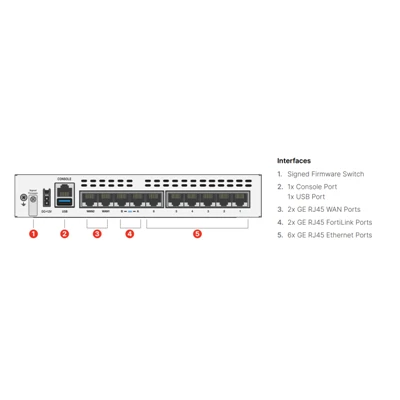

Cisco switches, designed and manufactured by Cisco Systems, are network devices that primarily feature standardized rack-mounted structures, while also including desktop and modular models to meet the deployment needs of different networking environments.
In terms of overall form, most Cisco switches adopt a rectangular metal chassis design. The enclosure is typically made of aluminum alloy or high-strength steel, ensuring structural durability while supporting effective heat dissipation and electromagnetic shielding. This flat, compact structure is optimized for installation in standard 19-inch server racks, making it a common form factor in data centers and enterprise server rooms.
On the front panel, switches are usually equipped with multiple Ethernet ports arranged in organized groups to facilitate cable management. Higher-end models may also include fiber optic interfaces, stacking ports, and status indicator lights, which display device operation, port connectivity, and data transmission activity, allowing administrators to monitor system status easily.
The rear side of the device typically contains power interfaces, cooling fan modules, and management ports. Some high-performance switches support redundant power supplies to enhance system reliability. The ventilation design, often implemented with grids or perforated panels, improves airflow and ensures stable cooling during continuous operation.
In terms of product structure, Cisco switches are generally classified into fixed configuration and modular designs. Fixed models have a predefined number of ports and are suitable for small to medium-sized networks, while modular switches allow users to add or replace interface modules, making them more suitable for large enterprises and data center environments.
In addition, compact desktop switches are also available. These models feature smaller footprints and simplified designs, making them ideal for small offices or branch networks. Their focus is on convenience and low power consumption rather than high-density expansion capabilities.
Overall, the physical design of Cisco switches balances standardization, functionality, and scalability. Through rack-mounted, modular, and desktop forms, they are able to meet the diverse requirements of different network sizes and application scenarios.