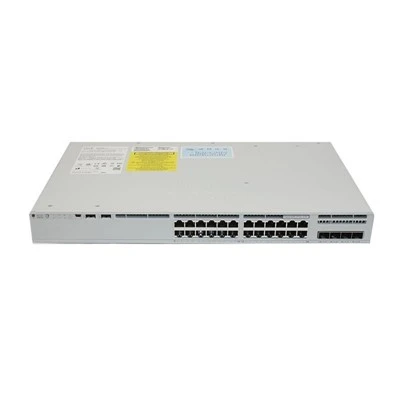



A switch can arrive in time and still be the wrong spare. An accurate Cisco Catalyst spare quote identifies the installed chassis, the complete orderable SKU, the destination and the accessories needed to put the replacement into service. The purchase line should also say what a site will reuse. "Same as installed" leaves all of those decisions with someone who may never see the rack.
Start with the equipment label and the installed inventory record. AITI's Cisco switch range provides a starting point for checking model availability. Cisco publishes separate ordering and hardware tables by Catalyst family. Use the table for the installed model, and identify any difference between the physical label, original purchase order and proposed replacement before approving the quote.
Tie the chassis SKU, destination and every essential accessory to the actual replacement plan.

Turn the installed chassis into a purchasing line
Ask the site technician for a readable photo of the model label, a view of the installed front panel, and the inventory entry that describes the switch. The label helps establish the product identity. The panel shows which interfaces are actually occupied and which accessories will have to move. Share serial information only where it is relevant and permitted.
Record the complete offered SKU and the ordered support or software items, as applicable. Check uplink type, power configuration and any stack requirements against the actual site. A chassis that fits the shelf may still be unsuitable if it cannot take the required uplink or if its stack compatibility differs. Let the network owner resolve those questions before asking purchasing to accept a substitute.
A useful exception review lists exactly which installed features the replacement must preserve. For example, a switch with unused fixed uplinks may have very different constraints from a switch whose active uplinks terminate on a specific fiber plant. A buyer who sees "24-port" on both descriptions cannot resolve that difference from port count.
Give each destination an accessory list
Use distinct quote lines for the regional cord, rack hardware, optics, stack components or other items the rollout requires. Identify which accessories travel with the chassis and which are site stock. The destination's approved plug and appliance connector should be confirmed on the order. Do not infer the plug from a distributor's shipping address or a photo of the chassis.
| Quote field | Confirm with the site | Require on the reply |
|---|---|---|
| Chassis | Installed model and intended use | Exact offered orderable SKU |
| Power | Required local plug, connector and power supply scope | Exact included and optional items |
| Fit | Rack arrangement, approved mounting and clearance | Itemized hardware and exclusions |
| Interfaces | Required uplinks, optics and any stacking hardware | Compatibility assumptions and complete accessory codes |
| Availability | Quantity, destination and date needed | Current item-level status and outstanding confirmation |
If a buyer requests three spares for sites in different countries, allocate them by destination even when the chassis is identical. The two sites that have usable spare cords may only need equipment and mounting hardware. The third site may need the full approved kit. Match cord, rack and uplink counts to each location rather than applying the same quantity to every row.
Keep the commercial status tied to the exact item
Ask AITI to check availability against the specific SKU and each essential kit line. A distributor's listing supports an inquiry. Request separate confirmation of actual quantity, condition and shipment basis. Ask who supplies each required item and whether a split shipment would leave the site unable to install. If supply is constrained, keep a proposed substitute identifiable until engineering approval.
Compare competing offers on equivalent scope. Check whether one includes mounting hardware or a power cord and another leaves it to the installer. Request written clarification of service, license or support terms where those items matter. Approval should be easy to interpret after the original buyer is out of the office.
Compare the spare against a real service ticket
Imagine a branch switch fails shortly before the end of a maintenance window. The technician opens the spare box and finds an otherwise acceptable switch without a compatible power cord or the mounting brackets needed in that rack. The failure is in the service kit definition, even if the chassis purchase matched. Start the RFQ by asking the person who would perform that repair what must be available at the cabinet.
Describe the replacement purpose on the quote request. A cold shelf spare, a fully prepared branch replacement and a pooled spare for several locations impose different demands. A pool can work only for locations whose installation and compatibility have been approved for that combination. List supported locations and keep any site-specific accessory stored or allocated with the relevant job.
For an illustrative allocation, two sites each retain one usable mounting kit but only one has an approved spare power cord. A quote for two chassis, one cord and no additional mounting kits derives from those explicit assumptions. If one of the mounting kits is already reserved, the count changes. Put the source of the reuse information on the request and date it. A purchasing lead reviewing the offer should be able to reproduce the counts without asking each site again.
Record license and lifecycle questions separately
The part number review is also the right time to ask which support and software terms apply. Identify the installer's needs and check authoritative Cisco material for the relevant family. Confirm what is actually included, what relies on the buyer's existing entitlement and what still needs review. A description of an older installed unit cannot establish the terms of a proposed purchase.
Give the network owner a short difference list when comparing two offers. Columns for installed state, offered state and evidence make it easier to see whether someone is comparing the same combination. If the relevant stock or status changes, keep the new offer with its date and scope. If the buyer accepts a different configuration, carry its actual identity and approved conditions onto the purchase order.
Reserve the original SKU until the alternative is approved. Whichever item is selected, ask the warehouse to verify the carton identification and count separately from the site's final installation checks. That division helps establish whether a later discrepancy originated in the delivery or in the service arrangement.
The purchasing record should accommodate a return as well as a new shipment. If a spare is rejected for an incomplete kit, keep the carton identifiers and omitted items linked to that order. Do not move the spare to another site unless its hardware and the revised destination have been approved. Establish whether the supplier is replacing an accessory, completing the kit or proposing a different chassis. A reconciliation that says only "replacement sent" will not tell the technician what should be in the next box.
Consider the point at which the order becomes urgent. The warehouse may hold an acceptable chassis but need more time to obtain a site-specific accessory. In that case, ask for separate commercial statuses and make the operations owner decide whether partial dispatch is useful. A partial shipment may be valuable when the site has an approved loan kit. Record that assumption and confirm its availability before listing a delivery as operationally ready. The closeout measure is a usable spare arrangement at the destination.
When asking for proof, identify the fields that are material to the agreement. Equipment identity, accessory count, condition and support paperwork can require different evidence. Set a level of receiving inspection consistent with the contract, including how sealed material will be handled. Save the confirmed code and approved conditions with the offer. If support, stock or included accessory terms are unclear or commercially significant, obtain the seller's updated response before authorizing the purchase. An email thread can be archived, but the actual order should also communicate the decision.
Add a column for what can be verified from the carton and what requires an installation check. A serial label is useful for receipt. The technician who works at the cabinet should confirm the actual mount and required interfaces. If buying a cold spare for several buildings, make a destination map with the particular parts that serve each rack. Keep the map with the quote so a replacement can be taken from the correct shelf during an outage. The same review can expose surplus accessories on a quote for a cabinet that already has an accepted set.
One approval should establish whose decision controls a substitution. Supply teams can identify current offers and technical teams can compare required features. If the need-by date changes, ask whether the full kit is still available on that date and whether any earlier stock confirmation has expired. Send the exact orderable codes with the destination rather than requesting a generic availability update. That makes the reply directly usable as evidence for the purchase review.
Place any commercial caveat directly beside the affected item. If a cord is separately sourced, a receiving clerk should see that before opening a discrepancy against the chassis. Where a site provides part of the kit, confirm who owns the stock and who will supply it after a move. Ask the seller to recheck requested quantities and shipment dates once those assumptions are settled. This sequence ensures the final Cisco Catalyst spare quote answers a service requirement that can be verified by the technicians and procurement staff who rely on it.
Questions about spare kits
Does a family name identify the spare?
Record the complete installed label and request the exact offered orderable code. Confirm applicable hardware and software details for the actual installation.
Can a regional power cord be listed separately?
Yes. Ask the supplier to identify what it includes and confirm the required plug and connector with the destination's responsible owner.
Can the current optics be reused?
Have the network owner confirm exact codes, supported ports and the intended link conditions. Put the reuse assumption on the quote.
What if an alternative is offered sooner?
Ask for its complete identity and a written comparison. Keep the original request visible until engineering has approved a specific alternative.
Who confirms rack fit?
The site and equipment teams should review mounting hardware, position and clearance against the approved installation drawings or verified cabinet.
How should availability appear?
Request item-level confirmation for the exact offered SKU and required quantities. Document when it was checked and which kit lines are still open.
Request an itemized quote from AITI
Send the installed model, quantity, regional destinations, accessory requirements and need-by date. Ask AITI to confirm exact offered codes, kit contents and current availability.