
SEO brief, revised article, FAQ and publishing recommendations
|
SEO ELEMENT |
RECOMMENDATION |
|
Recommended SEO title |
Data Center Asia Hong Kong 2026: Four AI Infrastructure Trends |
|
Suggested URL slug |
/insights/data-center-asia-hong-kong-ai-infrastructure-trends |
|
Primary keyword |
AI data center infrastructure |
|
Secondary keywords |
data center networking solutions; Cisco Nexus switches; AI compute cluster; 400G data center network; Hong Kong ICT hardware supplier; global ICT procurement |
|
Search intent |
Informational with commercial investigation: buyers, system integrators and project teams evaluating AI-ready data center infrastructure and hardware sourcing. |
|
Meta description |
Explore four AI infrastructure trends from Data Center Asia Hong Kong 2026, including compute fabrics, 400G networking, security and global procurement. |
Publishing notes
- Use the article title below as the H1. Use the numbered section titles as H2 headings.
- Add internal links to relevant Cisco Nexus, Cisco UCS, Fortinet, data center hardware and contact/quotation pages.
- Use one original event image if available. Suggested image alt text: "AITI Tech at Data Center Asia Hong Kong 2026 discussing AI data center infrastructure."
- Keep the FAQ section on the published page and apply FAQ schema only when the answers are visible to users.
- Recommended primary CTA: "Send Us Your BOM for Availability and Lifecycle Review."
Data Center Asia Hong Kong 2026: Four AI Infrastructure Trends Buyers and System Integrators Should Watch
From AI compute clusters and high-speed network fabrics to security, lifecycle planning and cross-border procurement, the event highlighted how data center infrastructure is being redesigned for the next phase of artificial intelligence.
Data Center Asia Hong Kong 2026 brought together data center operators, cloud providers, system integrators, technology vendors and infrastructure buyers at a time when AI workloads are changing the economics and architecture of digital infrastructure. The event was more than a showcase of individual products. It offered a useful view of how compute, storage, networking, security and operations are converging into a single AI-ready infrastructure strategy.
For enterprise buyers, the key question is no longer simply how many servers or switches to purchase. Project teams must now determine whether the complete architecture can support high-density compute, rapidly growing east-west traffic, stricter security requirements and predictable multi-region delivery. Based on the themes highlighted at the event, four shifts deserve particular attention.
1. AI Compute Is Redesigning the Entire Data Center Stack
AI training and inference place very different demands on infrastructure from traditional enterprise applications. GPU-intensive workloads require large amounts of parallel compute, high-performance storage and a network capable of moving data between accelerators with minimal delay. As a result, many organizations are redesigning racks, power allocation, cooling, storage and network architecture as one integrated system rather than upgrading each layer independently.
The most visible change is the growth of dense AI compute clusters. These environments may combine GPU servers, high-throughput storage, SmartNICs or DPUs, management networks and dedicated compute fabrics. Solutions such as NVIDIA BlueField DPUs can offload selected networking, security and storage functions from host CPUs, while GPU platforms and high-performance storage systems increase the pressure on the network connecting the cluster.
This means that server selection cannot be separated from network design. Before issuing a request for quotation, buyers should confirm the expected workload, cluster size, rack density, network topology, storage traffic and future expansion requirements. A technically accurate bill of materials should reflect the full architecture, not only the headline server model.
2. Data Center Networking Is Moving Toward Faster, More Predictable Fabrics
AI clusters generate substantial east-west traffic between servers, storage nodes and accelerators. In this environment, bandwidth alone is not enough. Latency, congestion control, buffer behavior, telemetry, optical compatibility and cabling design can directly affect cluster efficiency and application performance.
Leaf-spine architectures remain a common foundation because they provide predictable paths and scale-out capacity. Depending on the project, buyers may evaluate 100G and 400G switching today, while 800G is becoming relevant for the highest-density AI environments. Ethernet-based fabrics using technologies such as RoCEv2 are receiving increasing attention, while InfiniBand remains important in many high-performance computing and AI deployments. The right choice depends on workload requirements, operational skills, vendor strategy and total cost of ownership.
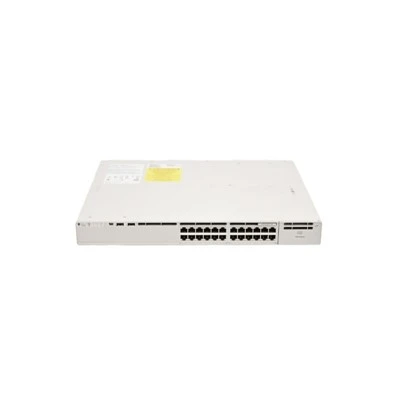
Product selection should therefore go beyond choosing a switch with the required port count. Project teams need to confirm switch architecture, airflow direction, power configuration, supported software release, transceiver compatibility, breakout options and the exact cable type required for each link. Data center network equipment may include Cisco Nexus 9000 switches, Cisco MDS storage networking, Arista data center switches, NVIDIA Spectrum networking and high-speed optical transceivers. Each product family serves a specific role, and substitutions should be reviewed at the architecture level rather than treated as simple price alternatives.
3. Intelligent Operations Are Becoming Essential, Not Optional
As infrastructure becomes denser and more distributed, manual monitoring is increasingly inadequate. Data center infrastructure management, network telemetry, AIOps and digital-twin tools can help operations teams understand capacity, identify anomalies and reduce the time required to diagnose faults.
However, intelligent operations depend on accurate data. Hardware, software and management platforms must expose reliable telemetry, and operational teams need consistent naming, configuration and lifecycle records. AIOps cannot compensate for an undocumented environment or a bill of materials assembled without regard to software compatibility.
For procurement teams, this changes the buying process. Management licenses, support coverage, controller compatibility and software entitlements should be reviewed together with the physical hardware. A lower hardware price may create a more expensive operational problem when the required license, subscription or management platform is missing.
4. Security, Compliance and Lifecycle Planning Must Be Built In
AI infrastructure increases both the value and the exposure of enterprise data. Security therefore needs to be designed into the architecture from the beginning. Common requirements may include network segmentation, secure management access, firewall policy, east-west traffic visibility, zero-trust controls and protection of cloud-connected workloads.
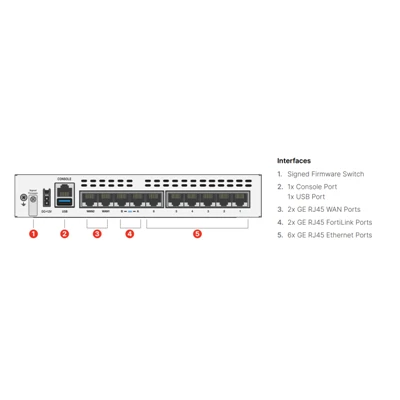
Security products should also be matched to their correct use case. Cisco Secure Firewall and Fortinet FortiGate can support data center and perimeter security, while centralized platforms such as FortiManager or FortiAnalyzer may be required for larger deployments. Campus switching and wireless products such as Cisco Catalyst or Aruba CX may support office, operations or edge environments, but they should not be presented as replacements for dedicated data center switching platforms.
Compliance extends beyond security configuration. International projects must verify product origin, regional SKU, export and import documentation, software licensing, local certification and support eligibility. Lifecycle status is equally important. A discontinued or end-of-support model may still be available in the market, but it can introduce future maintenance and expansion risks. Every major project should include an EOL/EOS review before purchase.
The Procurement Reality: Delivery Certainty Is Part of the Architecture
A data center project rarely depends on one product. A single deployment may require data center switches, storage networking, servers, firewalls, optics, cables, management licenses and spare units. The challenge becomes greater when equipment must be delivered across several countries or in multiple project phases.
For this reason, buyers and system integrators should evaluate a supplier on more than unit price. Reliable project supply requires genuine products, traceable sourcing, accurate part-number validation, regional compatibility checks, lifecycle review, complete commercial documentation and a realistic logistics plan. Reserved inventory and batch delivery may be necessary when installation schedules extend across several sites or months.
This is especially important for Cisco, Fortinet, Huawei, Aruba, Juniper, HPE and NVIDIA infrastructure, where similar-looking model numbers may have different licenses, airflow directions, power options, regional restrictions or support conditions. An incorrect suffix or missing entitlement can delay deployment even when the physical device arrives on time.
Five Questions Buyers Should Ask Before Approving a Data Center BOM
1. Is every part number technically correct? Confirm port type, airflow, power supply, software image, licenses, optics and accessories rather than checking only the base chassis.
2. Is the equipment genuine and traceable? Request clear product condition, source documentation, serial-number records where appropriate and written warranty terms.
3. Is the model suitable for the destination market? Check regional SKU, certification, plug type, import documentation, licensing and support eligibility before shipment.
4. What is the lifecycle status? Review end-of-sale, end-of-support and recommended replacement options to avoid building a new project around an aging platform.
5. Can the supplier support the complete delivery plan? Confirm inventory reservation, partial shipments, customs documents, lead time, replacement procedures and communication during the project.
Why Hong Kong Remains Relevant for Cross-Border ICT Procurement
Hong Kong continues to play a useful role as a commercial and logistics bridge between Asia-Pacific technology supply and international project demand. For Middle East, European, African and Asian buyers, a Hong Kong-based procurement hub can simplify contracting, international settlement, documentation and multi-region delivery when the underlying supply process is properly controlled.
The value is not the location alone. It comes from combining access to Asia's technology supply chain with professional product validation, transparent commercial terms and practical international logistics. For project buyers, that combination can reduce the risk of incorrect models, incomplete licenses, missed delivery windows and fragmented sourcing across too many vendors.
AITI Tech's Approach to AI and Data Center Hardware Supply
AITI Tech Limited supports global system integrators, resellers and enterprise buyers with ICT hardware sourcing from Hong Kong and Shenzhen. With more than 20 years of industry experience, our work focuses on genuine enterprise hardware, accurate part-number review and dependable international delivery.
For data center and AI infrastructure projects, we can support BOM review, product availability checks, lifecycle verification, alternative model evaluation, documentation and phased delivery. Our product scope includes enterprise networking, data center switching, servers, network security, optics and related infrastructure from brands such as Cisco, Fortinet, Huawei, Aruba, Juniper, HPE and NVIDIA.
The objective is not simply to ship hardware. It is to help project teams receive the correct equipment, with the required documentation and a delivery plan aligned with deployment schedules.

Industry networking in Hong Kong following Data Center Asia 2026, bringing together technology professionals and international business connections
Conclusion
Data Center Asia Hong Kong 2026 highlighted an important industry shift: AI infrastructure is turning data center design into a full-stack discipline. Compute, storage, networking, security, operations and procurement can no longer be planned independently. Buyers that validate the complete architecture and supply chain early will be better positioned to control cost, reduce project risk and scale their infrastructure as AI demand grows.
|
Planning a data center upgrade or AI infrastructure project? Send AITI Tech your BOM for product availability, lifecycle and regional compatibility review. Visit www.hkaiti.com or contact our team for a project quotation. |
Frequently Asked Questions
What is AI data center infrastructure?
AI data center infrastructure is the combination of compute, storage, networking, security, power, cooling and management systems required to support AI training and inference workloads. Compared with conventional enterprise applications, AI workloads typically create higher rack density, greater east-west traffic and stricter requirements for latency and throughput.
Why are 400G and 800G networks important for AI clusters?
High-speed networks help move large volumes of data between GPU servers and storage systems. 400G is increasingly used in modern high-performance data center fabrics, while 800G is emerging for very dense AI environments. The appropriate speed depends on cluster size, oversubscription, topology, workload and budget.
What should buyers check when sourcing Cisco Nexus switches?
Buyers should verify the exact model, port configuration, airflow direction, power supplies, software requirements, supported optics, licensing, lifecycle status and destination-market compatibility. The complete bill of materials should include the required modules, transceivers and cables.
How can a supplier reduce risk in a cross-border data center project?
A capable supplier can validate part numbers, confirm product condition and origin, review lifecycle and regional compatibility, prepare documentation, reserve inventory and coordinate phased international delivery. Clear warranty and replacement terms are also important.
Can AITI Tech review an existing data center BOM?
Yes. AITI Tech can review model numbers, availability, lifecycle status, possible alternatives, licensing considerations and delivery planning for enterprise networking, security, server and data center hardware projects.
Internal Editorial Checklist (Remove Before Publishing)
Confirm the official event name and year in the page title and opening paragraph.
Add one or two original observations from Kelly's attendance, such as buyer questions, popular solution areas or recurring project concerns. Use only points that can be personally verified.
Link product references to live and relevant AITI pages; do not create links to thin or unfinished pages.
Verify every model family and lifecycle statement before publishing. Avoid listing a specific product as available unless stock has been confirmed.
Add a named author, publication date and a short AITI Tech company profile to strengthen trust and E-E-A-T signals.
Measure impressions, rankings, clicks and enquiries in Google Search Console and GA4 after publication; refresh the article after 8-12 weeks if performance is weak.