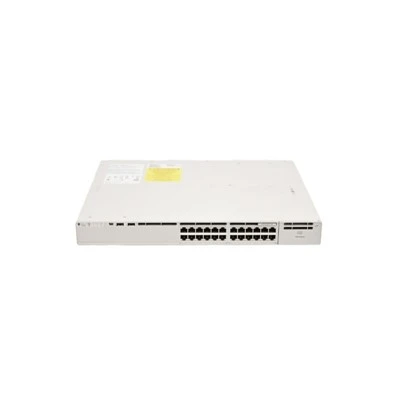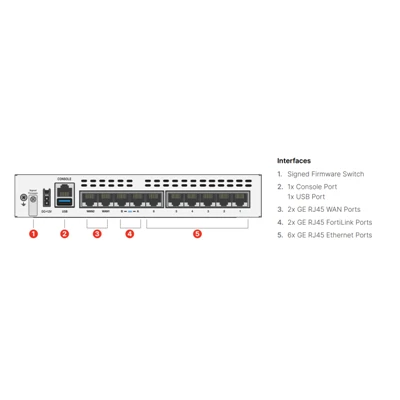

In modern enterprise wireless network architectures, wireless controllers serve as core management devices, and their structural design directly impacts network stability, scalability, and operational efficiency. Cisco wireless controllers adopt a centralized architecture combined with modular design principles, enabling efficient management of large-scale access point deployments and adaptation to complex enterprise environments.
From an overall structural perspective, a Cisco wireless controller typically consists of a control plane, a data processing module, and a management interface. The control plane is responsible for centralized wireless resource coordination, including channel assignment, radio frequency optimization, and roaming control. The data processing module handles wireless traffic forwarding and processing to ensure efficient and stable network communication. The management interface provides administrators with configuration, monitoring, and troubleshooting capabilities.
In terms of architecture, Cisco wireless controllers operate under a centralized control model, managing multiple access points through a unified platform. This structure eliminates the complexity of decentralized configurations and improves network consistency and maintainability. Access points communicate with the controller using lightweight protocols, allowing them to focus on wireless signal transmission while complex control functions are handled centrally.
Regarding scalability, Cisco wireless controllers support horizontal expansion and multi-device coordination. Enterprises can increase controller capacity or deploy clustered systems based on network size requirements, making them suitable for environments ranging from small businesses to large data centers.
In high availability design, Cisco wireless controllers typically include redundancy and failover mechanisms. When a primary controller fails, a standby device can quickly take over management tasks, ensuring continuous network operation and minimizing service disruption.

From a security perspective, wireless controllers integrate multiple layers of protection, including user authentication, access control, and policy enforcement modules, providing unified security management across the wireless network.
Overall, Cisco wireless controllers achieve efficient large-scale wireless network management and stable operation through centralized architecture, modular design, and high availability features, making them a critical component of modern enterprise wireless systems.