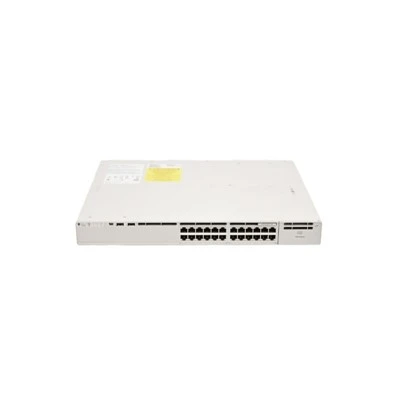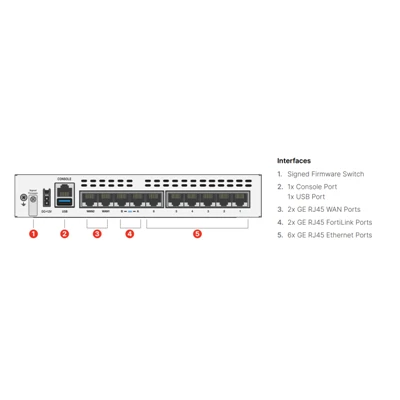

With the rapid development of industrial automation and smart manufacturing, industrial networks demand higher levels of stability, anti-interference capability, and real-time performance. Cisco industrial switches are key devices in industrial network systems, designed to enable reliable data exchange and communication between devices in complex industrial environments, ensuring stable production operations.
From a technical perspective, Cisco industrial switches operate based on Ethernet switching technology and use a MAC address learning mechanism to identify network devices. When a data frame enters the switch, the device reads the source MAC address and records it in its MAC address table. It then checks the destination MAC address and forwards the data to the corresponding port, reducing unnecessary broadcast traffic and improving transmission efficiency.
In industrial network environments, Cisco industrial switches commonly support redundant ring network technology. When a link failure occurs, the system can quickly switch to a backup path, ensuring uninterrupted communication. This fast recovery capability is especially important in industrial control systems, as it helps prevent production downtime and data loss.
In addition, Cisco industrial switches are designed with strong resistance to environmental interference and harsh conditions. Their hardware can operate reliably in extreme temperatures, high humidity, and strong electromagnetic interference environments. Industrial-grade power designs further enhance stability and reduce the risk of equipment failure.
Functionally, these switches support VLAN segmentation and traffic isolation, allowing different production areas or device types to be logically separated for better network management and security. With QoS technology, critical industrial data can be prioritized to ensure low-latency transmission of real-time control signals.
From a management perspective, industrial switches support remote monitoring and centralized control. Operators can view device status, port traffic, and network topology in real time, enabling fast troubleshooting and efficient maintenance.

Overall, Cisco industrial switches achieve high reliability and stability through MAC-based forwarding, redundancy mechanisms, and industrial-grade hardware design, making them an essential foundation for industrial automation and smart manufacturing networks.