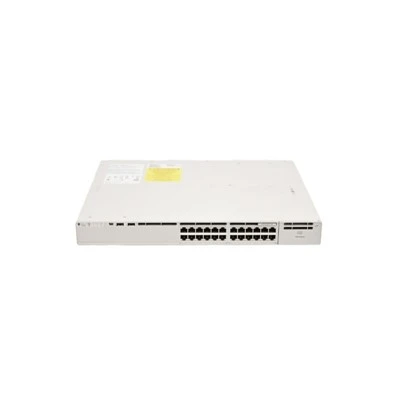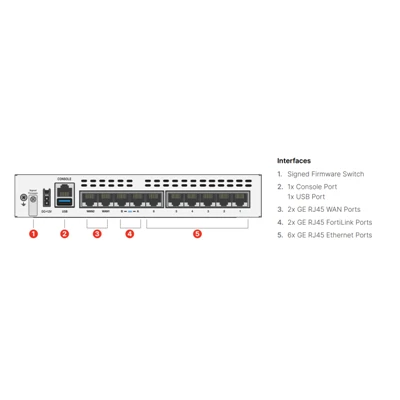

As wireless networks continue to expand in scale and the number of connected devices grows rapidly, enterprises face increasing demands for centralized management and network optimization. Cisco wireless controllers, as core components of enterprise wireless infrastructure, are widely deployed across various industries to centrally manage access points and optimize overall network performance, improving both stability and operational efficiency.
In enterprise office environments, Cisco wireless controllers are used to build unified wireless workplace networks. By centrally managing multiple access points, organizations can achieve seamless coverage and consistent configuration across the entire office space. Employees can maintain stable connectivity while moving between different areas, enabling efficient mobile work and collaboration. At the same time, the controller can dynamically allocate resources based on network load to improve overall efficiency.
In the education sector, wireless controllers are widely deployed in campus network infrastructures. Schools often need to support a large number of simultaneous users accessing learning resources, requiring high stability and strong concurrency capabilities. Cisco wireless controllers manage access points across classrooms, libraries, and dormitories in a unified way, enabling load balancing and signal optimization to ensure smooth teaching operations.
In the healthcare industry, wireless controllers are used to build secure and reliable hospital wireless systems. Doctors and nurses can access electronic medical records through mobile devices, enabling bedside care and real-time data updates. Through centralized security policy management, wireless controllers help ensure the safety and compliance of medical data transmission.
In public environments such as hotels, shopping malls, and airports, wireless controllers manage large-scale public Wi-Fi deployments. Under high-density user conditions, they optimize bandwidth allocation, reduce congestion, and improve user experience. Unified authentication mechanisms also enhance the security of public networks.

In industrial and enterprise park environments, wireless controllers support IoT device connectivity for production monitoring, equipment networking, and data collection, contributing to smart manufacturing and digital operations.
Overall, Cisco wireless controllers are widely used across enterprise, education, healthcare, public services, and industrial sectors due to their centralized management, network optimization, and security capabilities, making them a key component of modern wireless network architectures.