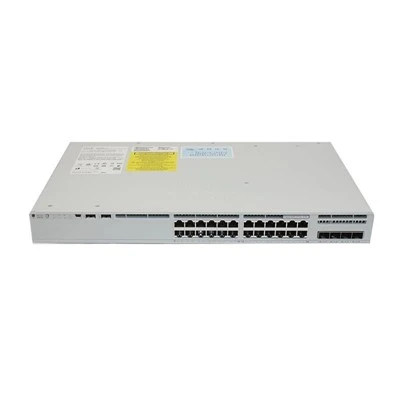

In modern enterprise wireless network architectures, wireless controllers are core devices that enable centralized management and overall optimization. The primary function of Cisco wireless controllers is to centrally manage and coordinate a large number of wireless access points within an organization, thereby improving network stability, security, and operational efficiency.
One of the key roles of Cisco wireless controllers is centralized management. Through a unified control platform, administrators can configure and manage multiple access points, including channel assignment, transmission power adjustment, and network parameter settings. This centralized approach eliminates the complexity of configuring devices individually and significantly improves operational efficiency.
Another important function is network optimization. Wireless controllers dynamically adjust wireless resources based on real-time network conditions, such as optimizing frequency usage, reducing signal interference, and balancing loads across access points. This enhances overall wireless performance and ensures a stable and seamless user experience.
In terms of security, Cisco wireless controllers play a critical role as well. They enable centralized deployment of security policies, including user authentication, access control, and encryption management, preventing unauthorized devices from accessing the network. At the same time, they can monitor abnormal traffic and device behavior in real time, strengthening overall wireless security.
Wireless controllers also improve network scalability. As enterprise networks grow, new access points can be easily added and integrated into the controller without complex individual configuration, making network expansion faster and more efficient.
From an operational perspective, wireless controllers provide visual monitoring and centralized management capabilities. Administrators can monitor network status, user connections, and traffic distribution in real time, enabling quick troubleshooting and performance optimization.

Overall, the main functions of Cisco wireless controllers include centralized management, network optimization, security enforcement, and scalability support, making them an essential component of modern enterprise wireless network infrastructure.