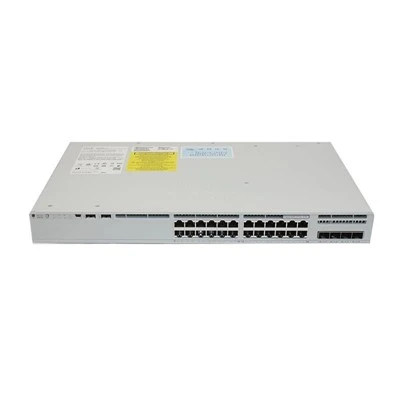

Cisco switches, developed by Cisco Systems, are essential networking devices that can be categorized into multiple types based on network architecture layers, performance requirements, and application scenarios. This classification allows them to meet the needs of networks ranging from small-scale environments to complex enterprise infrastructures.
From a network architecture perspective, Cisco switches are generally divided into access layer switches, distribution layer switches, and core layer switches. Access layer switches are designed to connect end devices such as computers, printers, and IP phones. They typically feature a high port density and cost efficiency, focusing on providing basic connectivity and local area network communication.
Distribution layer switches sit between the access and core layers, serving as an aggregation point for traffic from multiple access switches. They handle policy enforcement, traffic optimization, and preliminary Layer 3 routing functions. These switches are typically more powerful in performance and management capabilities, supporting inter-VLAN routing, access control, and efficient traffic handling, making them a key part of enterprise network design.
Core layer switches operate at the top of the network hierarchy and are responsible for high-speed data forwarding and backbone connectivity. They are designed for high bandwidth, low latency, and maximum reliability, and are commonly deployed in large enterprises, data centers, and service provider networks to ensure stable transmission of massive data flows.
From a functional standpoint, Cisco switches can also be categorized into Layer 2 and Layer 3 switches. Layer 2 switches operate primarily based on MAC addresses and are suitable for local network communication, while Layer 3 switches integrate routing capabilities, enabling communication between different IP subnets and improving network scalability.
In addition, Cisco switches can be classified by deployment environment into enterprise switches, data center switches, and industrial switches. Enterprise switches focus on stability and manageability for office environments, data center switches emphasize high density, performance, and low latency, while industrial switches are designed to withstand harsh environmental conditions such as extreme temperatures, dust, and electromagnetic interference.
Overall, Cisco switches provide a multi-layered and diversified product portfolio that spans from basic access to core backbone networks, delivering stable and efficient infrastructure support for digital transformation across various industries.